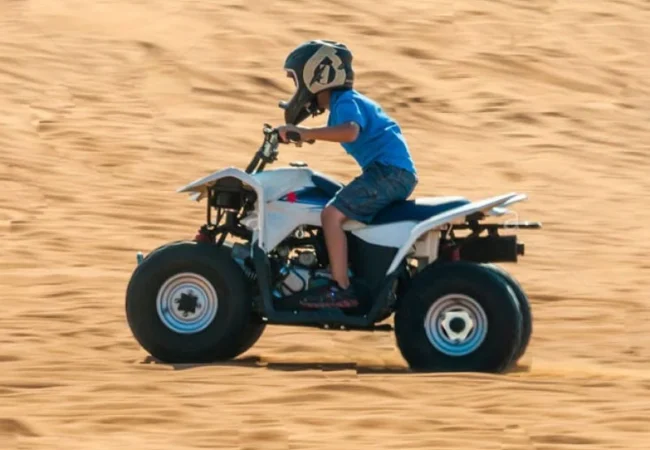
 AED 150
Yamaha 90cc
- Ages 9-12
- Track
- Supervised
A dedicated loop right next to base camp, throttle capped low, so the youngest in your group get their own stretch of sand without needing the full adult route.
Book this ATV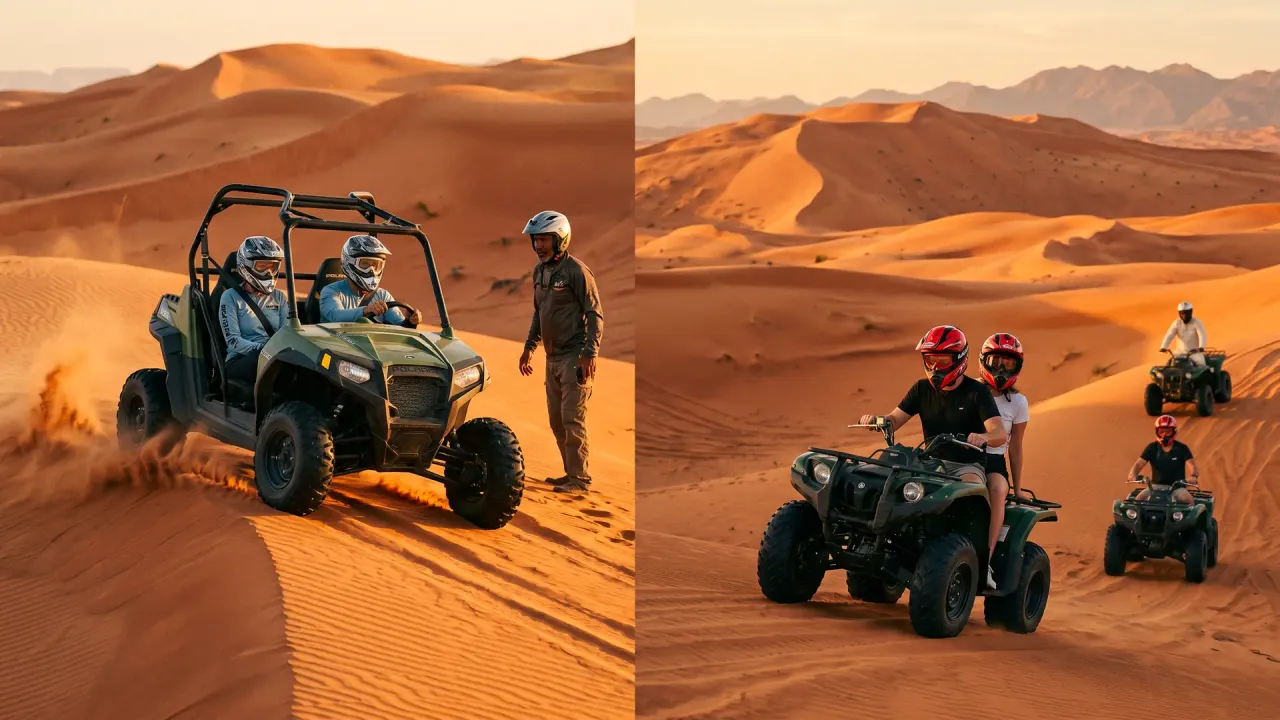
Riding here was never meant to be one fixed hour. Through the cooler months the loop stays open most of the day; once the heat builds, departures shift to first light and last light, when the sand has actually had a chance to lose its warmth. The fleet runs eight machines deep, starting with a supervised children's quad and climbing all the way to the Raptor, guide out front no matter which month or hour you book.
Red-dune country, roughly 45 minutes clear of Downtown toward Al Lahbab, run on two departure windows rather than one — an early slot before the heat sets in, and a later slot once it has let go again. Every rider gets a Yamaha to themselves, guide out front. Pricing steps up with the machine itself: the 220cc opens at AED 200 for adults, the 400cc that most riders end up choosing runs AED 250, and the Raptor 700cc tops out at AED 795 once you're cleared to take it out. A separate supervised lane keeps riders aged nine to twelve on the 90cc, priced at AED 150.
Nothing outsells one combination here: Evening Desert Safari plus your own ATV ride plus BBQ dinner, all in for AED 375 — the single most-booked package across the whole site, timed so dune bashing and dinner both land once the night has properly cooled off. Secure online advance payment confirms your booking, support available 24/7.
Every figure below applies per rider, since one machine seats one person. Only the 400cc double breaks that rule, seating a pair for a single combined price. Payment only happens once your date, slot and pickup are all agreed.
| Machine | Suits | From |
|---|---|---|
| Yamaha 90cc | Children 9 to 12 on the supervised track, guardian on site. | AED 150 |
| Yamaha 220cc | Anyone who has never touched a throttle. Light, calm, hard to get wrong. | AED 200 |
| Yamaha 400cc | The default tour machine. Handles the standard route without effort. | AED 250 |
| Yamaha 400cc double | Two riders, one machine, one fee. | AED 350 |
| Yamaha 400cc turbo | Same machine with more out of a bowl. The usual repeat booking. | AED 350 |
| Yamaha Grizzly 450cc | Heavier utility frame. The pick for longer routes. | AED 450 |
| Sports quad 625cc | Sharper and less forgiving. For riders with real hours. | AED 700 |
| Yamaha Raptor 700cc | Fastest on the fleet, released after a rider check. | AED 795 |
Every tour runs guided, at whichever slot you book, so the machine underneath you matters more than the hour on the clock. Pick the one you will stay relaxed on and the guide builds the route around it.
AED 150A dedicated loop right next to base camp, throttle capped low, so the youngest in your group get their own stretch of sand without needing the full adult route.
Book this ATV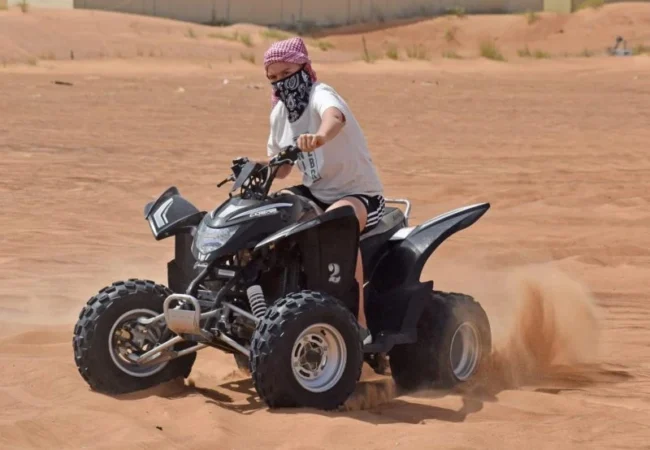 AED 200
Built to forgive a jumpy right hand. Most first-timers step off wishing they had booked a longer slot, never a bigger machine.
Book this ATV AED 250
The machine the standard route is actually built around — enough pull to clear every climb without asking much of you in return.
Book this ATV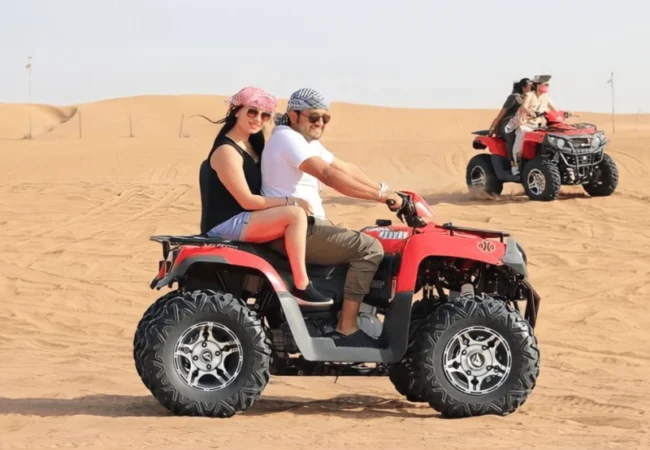 AED 350
One saddle, two riders, one fee — the fix for a pair split between someone who wants to drive and someone who just wants to come along for it.
Book this ATV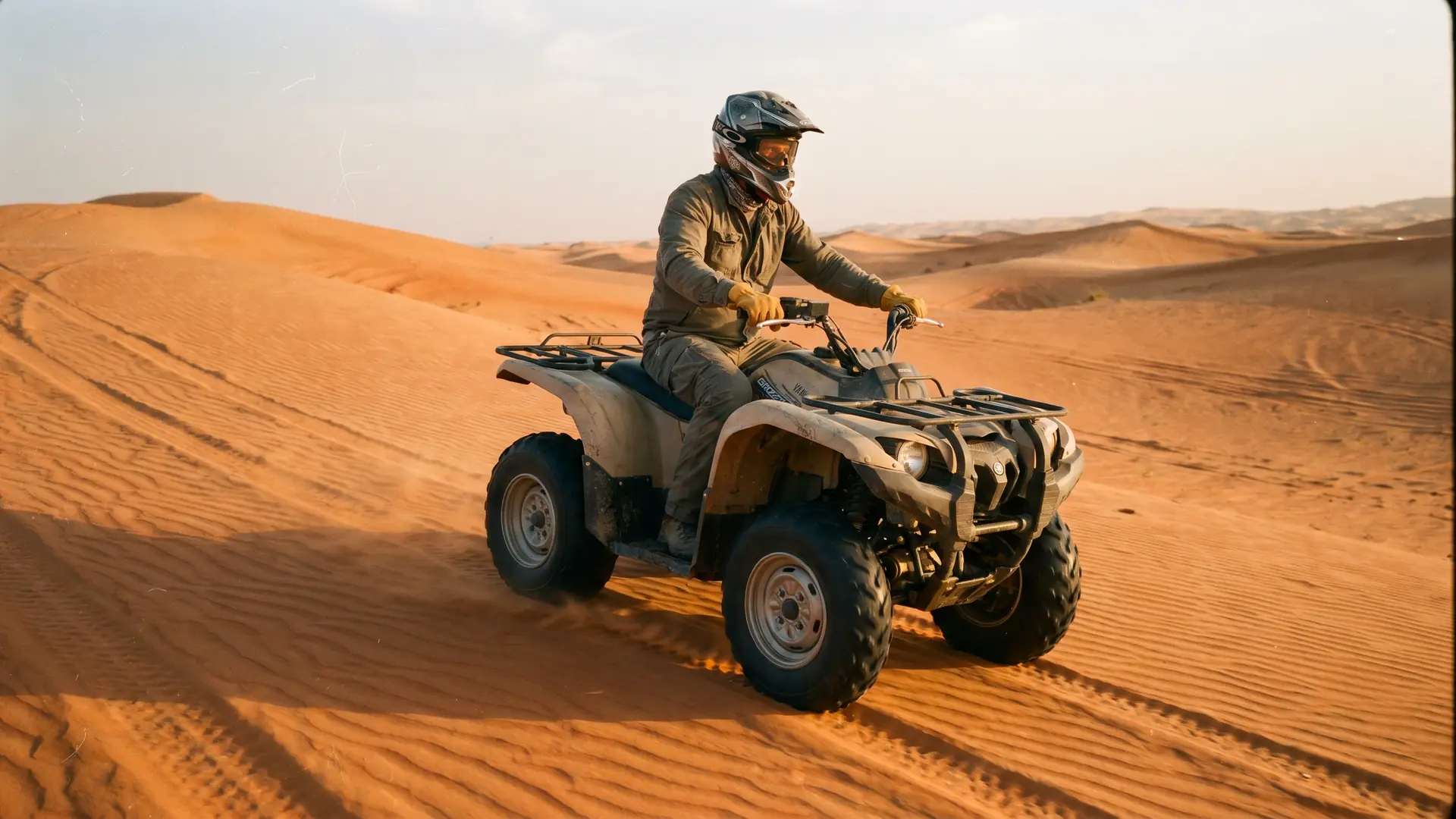 AED 350
Same frame and seating as the standard 400cc, just with a harder hit of power the instant you open the throttle climbing out of a dip — most riders notice it within the first minute.
Book this ATV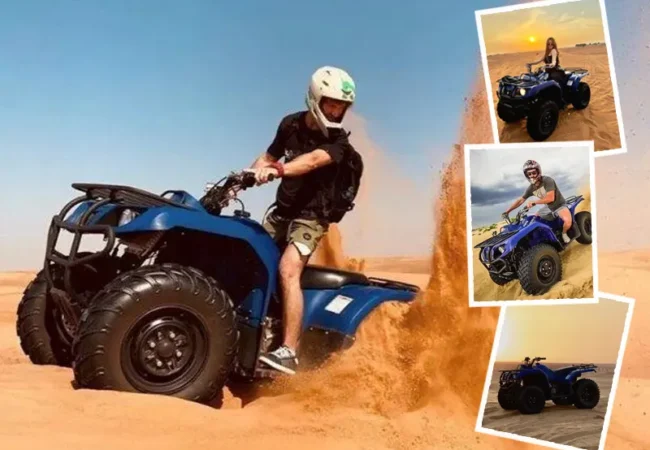 AED 450
Low, heavy ballast keeps this one glued to the ground when the terrain gets rough. If your booking covers the extended route instead of the standard loop, this is the machine worth asking for by name.
Book this ATV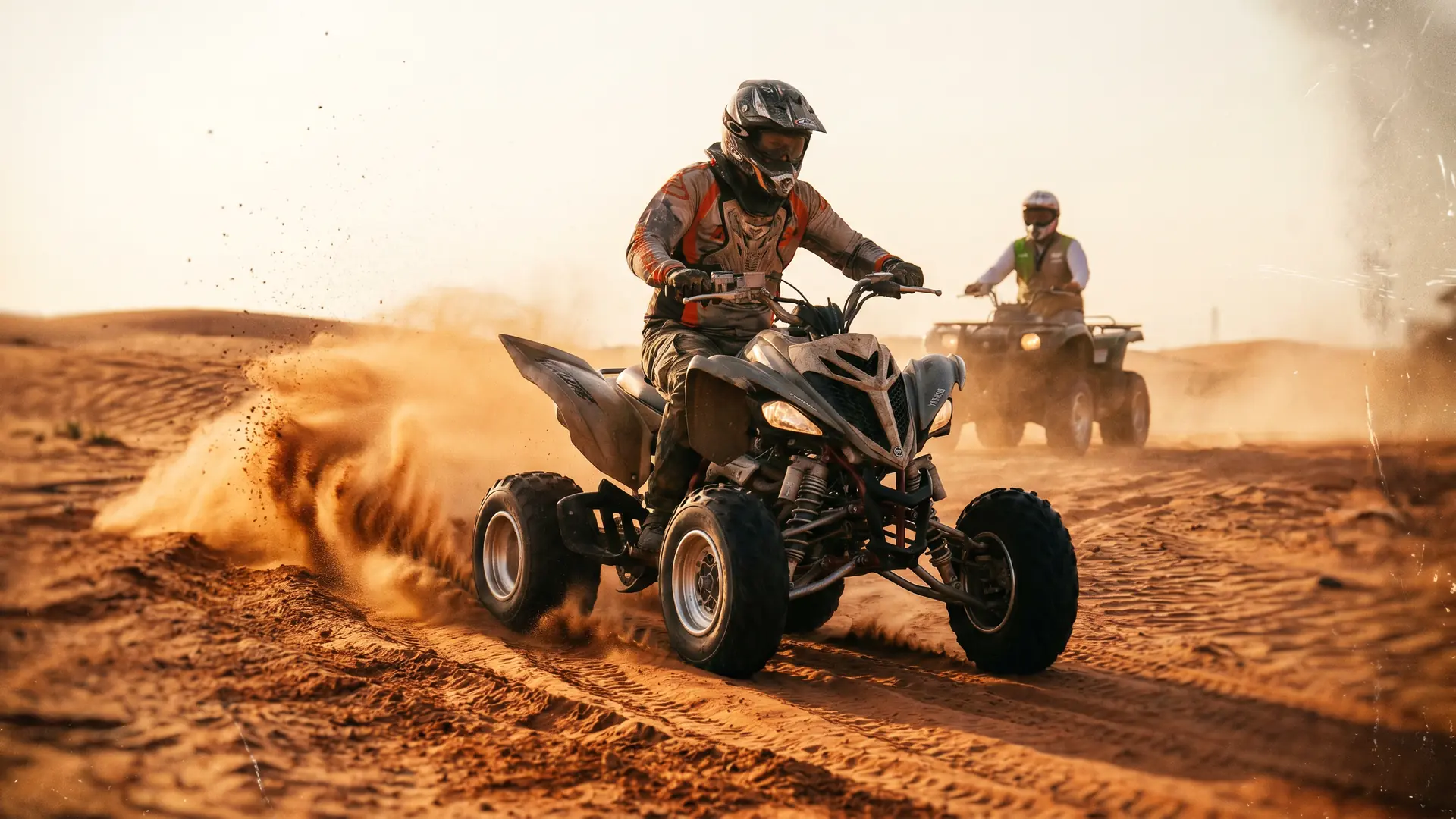 AED 700
Stand on the pegs and shift your weight into it, and this machine rewards you. Sit still and hope, and it will not return the favour.
Book this ATV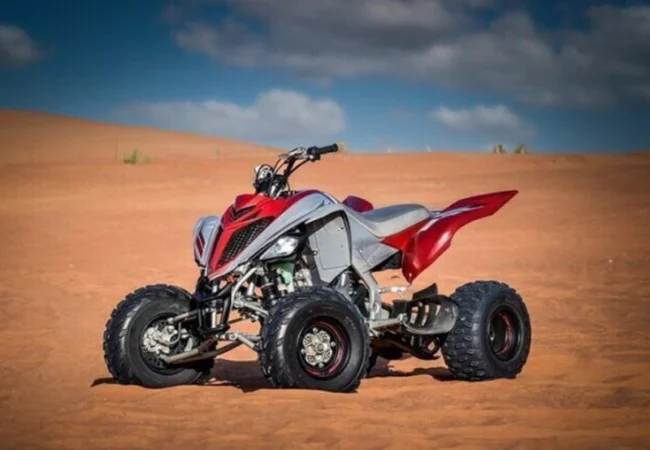 AED 795
The quickest machine in the fleet, and getting the keys isn't automatic — guides ask what you've ridden before handing it over.
Book this ATVThe ride itself runs about an hour either way you book it. What actually changes between the two departures is the light and the temperature, not the machine or the route — and that is exactly why pairing a session with a full safari and dinner outsells the ATV booked on its own.
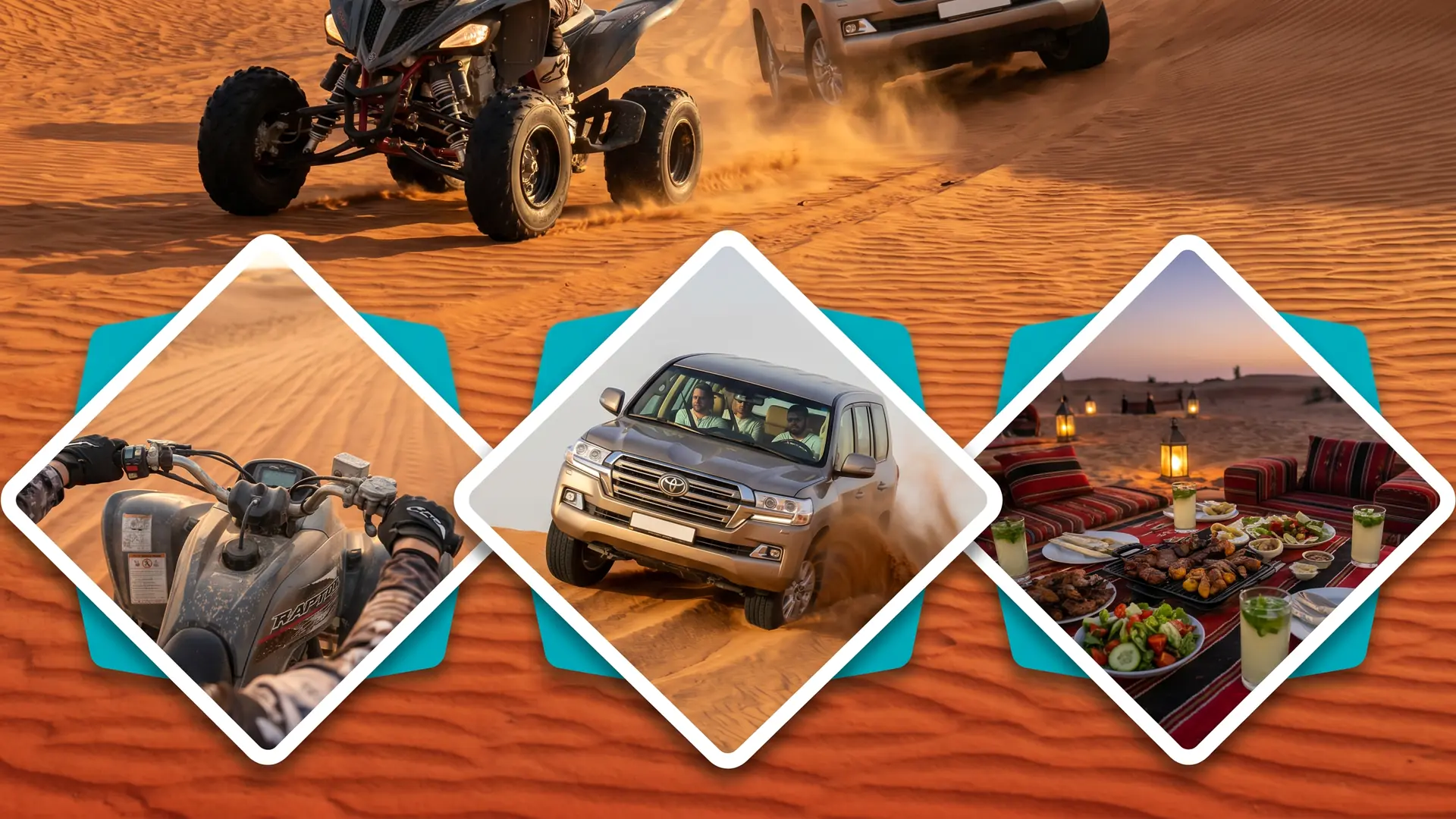 AED 375
Dune bashing in a Land Cruiser while the light turns gold, your own ATV session once the ridges start cooling off, then the halal BBQ camp under a properly dark sky. The single busiest booking on this site.
Book this tour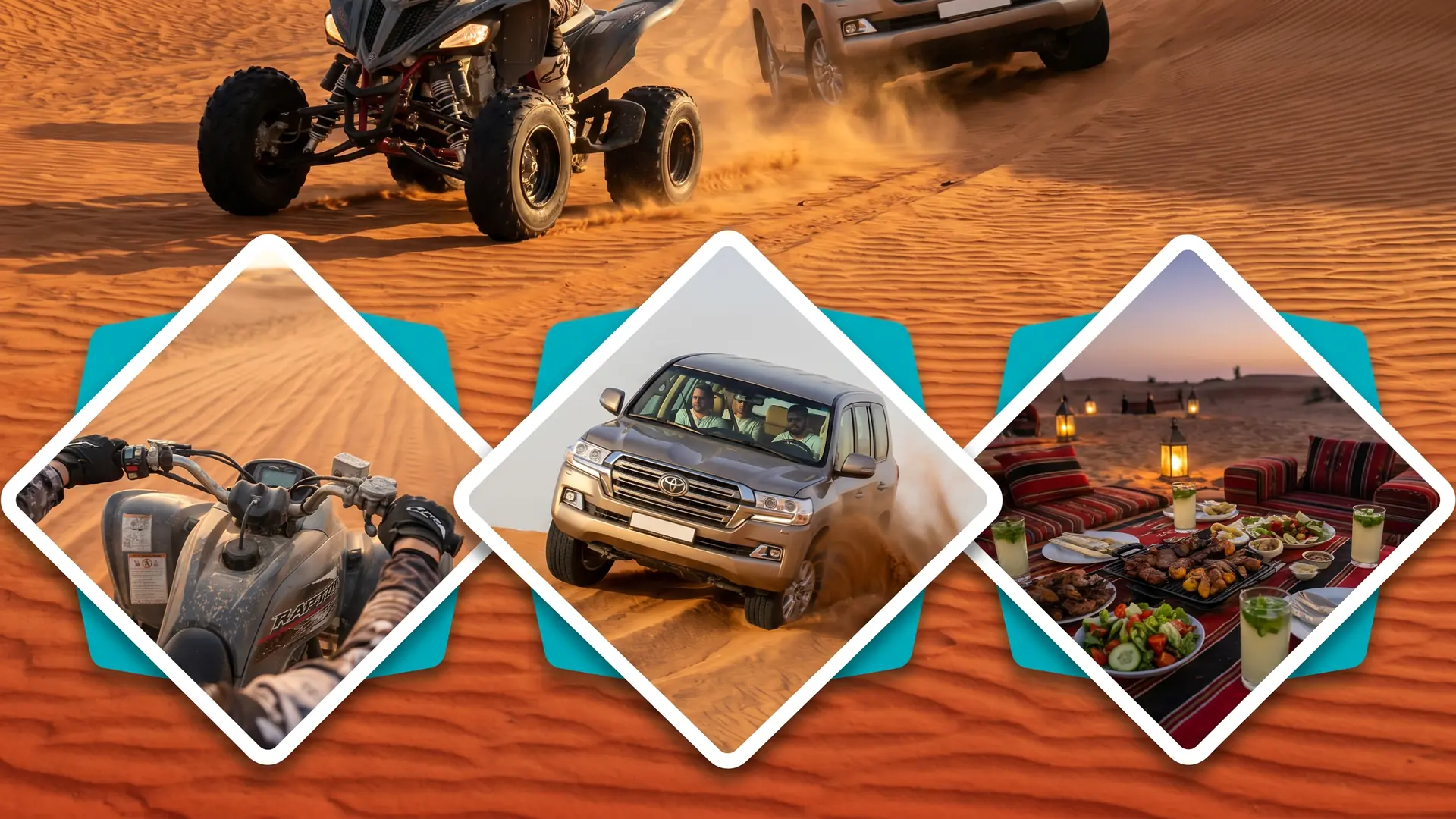 AED 290
Sand that has sat out all night grips harder than sand baked since noon, which is exactly why this slot suits anyone who has never thrown a leg over a machine before. You'll have the whole afternoon back in the city rather than losing it to the ride.
Book this tour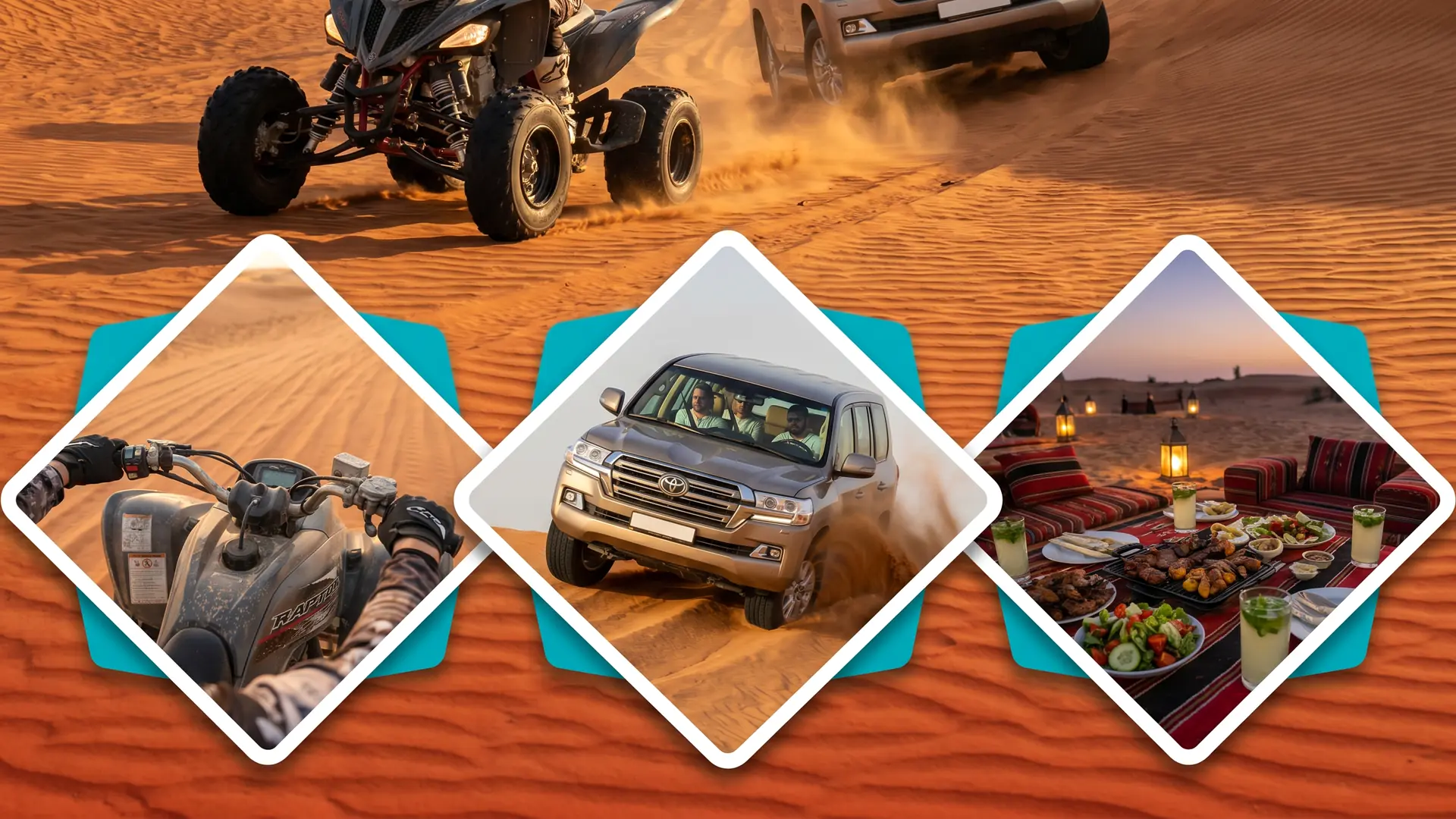 AED 700–1,300
Built for riders who would rather skip getting bounced around in a 4x4 altogether. No dune-bashing vehicle involved — just your ATV session followed by the camp dinner. The final price depends on which machine you book.
Book this tour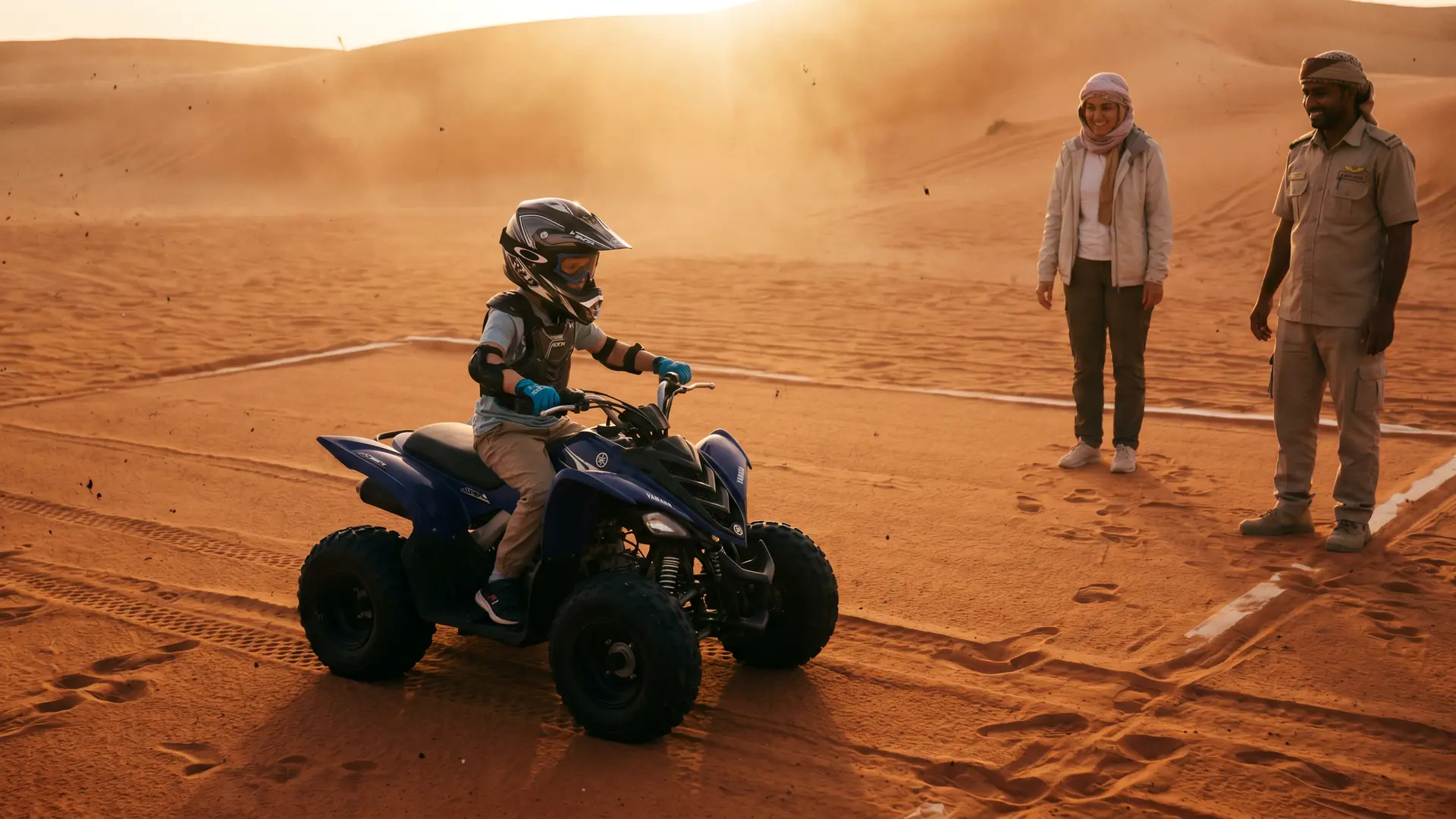 AED 150
The youngest riders stay busy on their own 90cc loop a short walk from where the adults saddle up for the full route, everyone working off the same base and the same booking window instead of splitting the visit in two.
Book a family tourCars don't count here. Think motorbikes, jet skis, anything where a throttle sits under your right thumb.
Location matters here more than people usually plan for, especially once a specific time slot enters the picture.
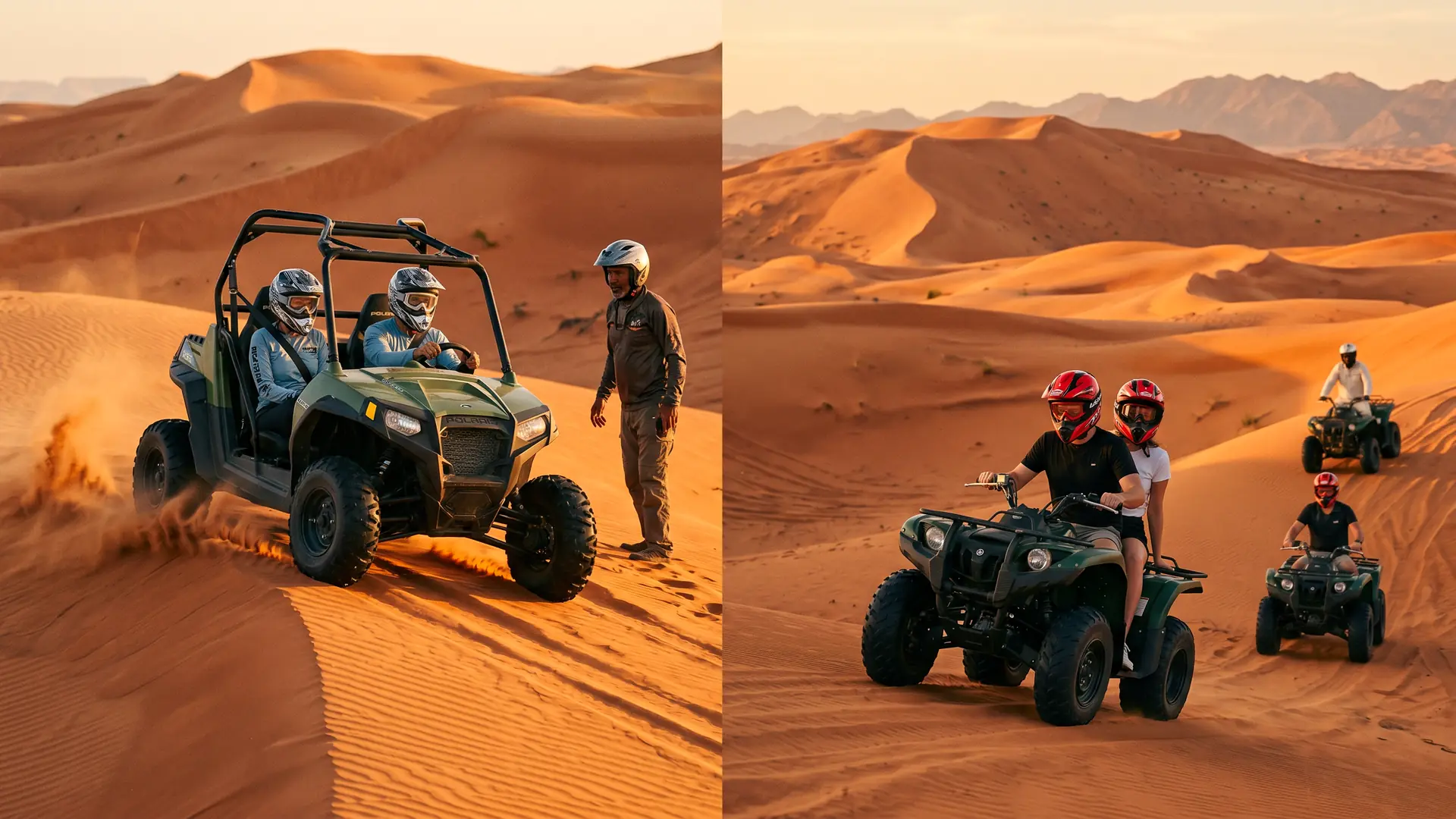
An ATV has you perched on top of the engine. A buggy puts you inside one, strapped behind a wheel with a roll cage overhead and room for passengers. Both run on the same dunes at the same time slots, and plenty of bookings here combine the two.
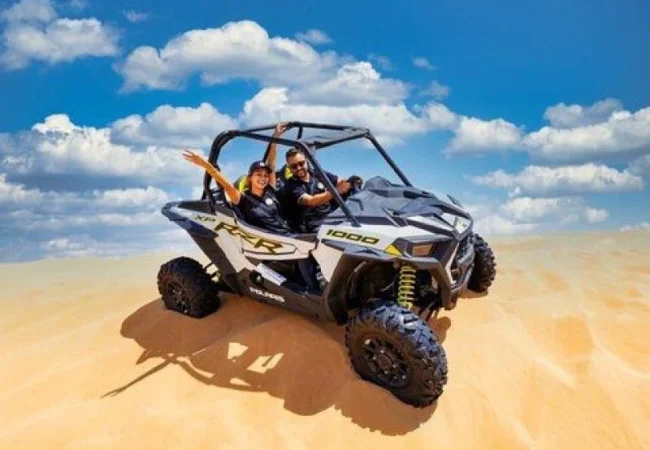
Where most first-time buggy drivers start. Predictable under braking, and small steering mistakes don't get punished the way they might on a sharper machine.
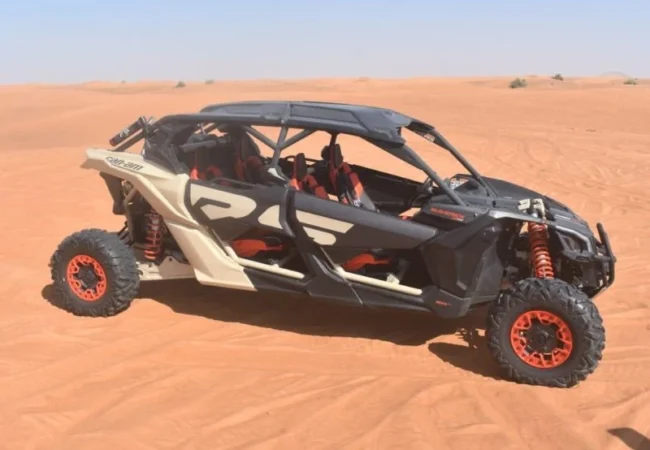
The wide stance and long-travel suspension flatten out terrain a smaller buggy would bounce you around on. Pricing is per vehicle, not per passenger, so a full car costs the same as a half-empty one.
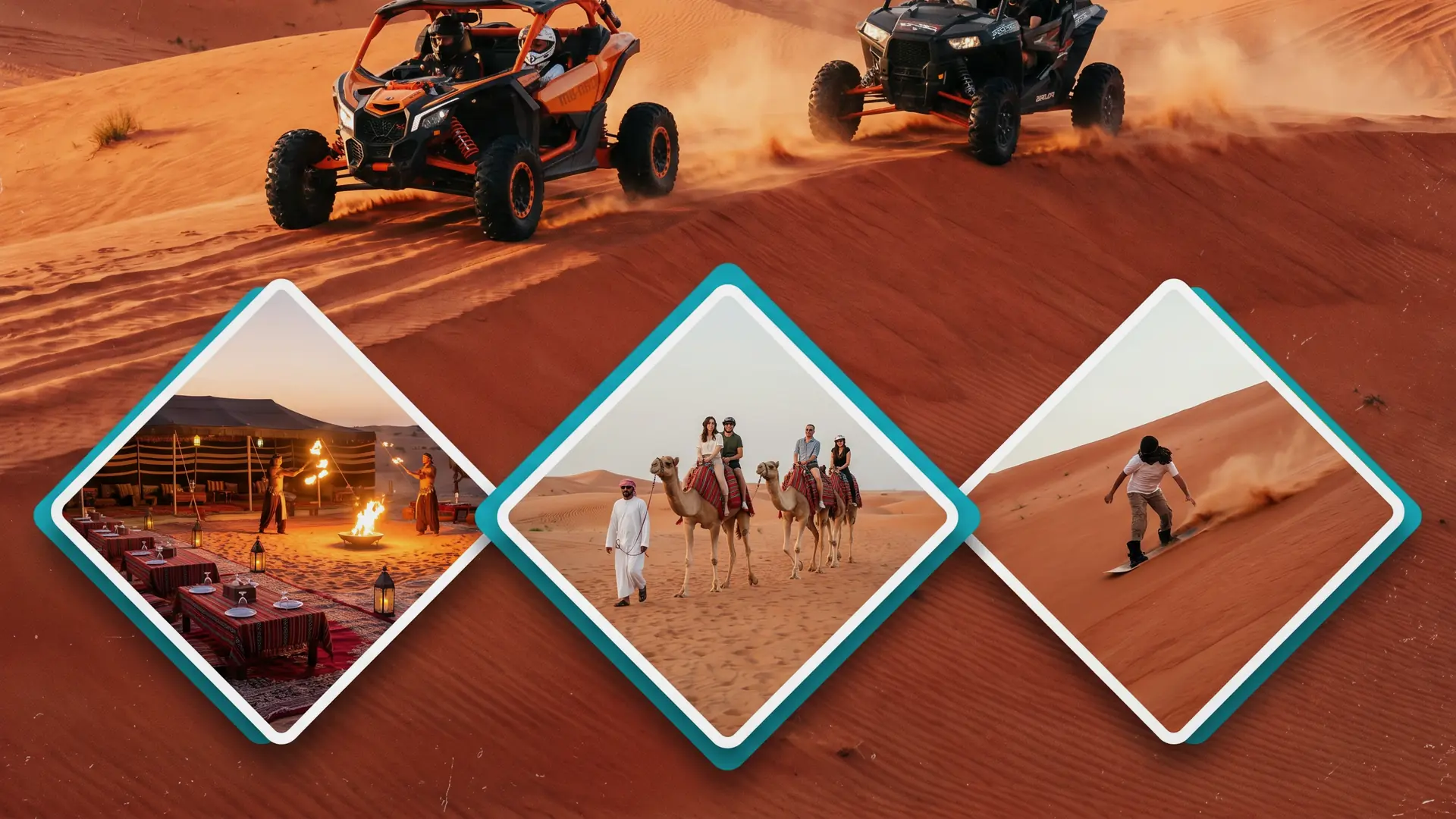
Start on the ATV while your grip is still fresh, switch to the buggy once the sun sits lower. Combined bookings usually land in the AED 290 to AED 1,100 range, the exact figure depending on which machines make the final cut.
Every other activity on this page gets a straight price. The KTM does not — we want to know what you have actually ridden first. A four-wheeled ATV can paper over shaky throttle control or a badly timed lean; a two-wheeled dirt bike on loose sand shows every mistake instantly, and there is nobody standing in for you if your balance is not there yet.
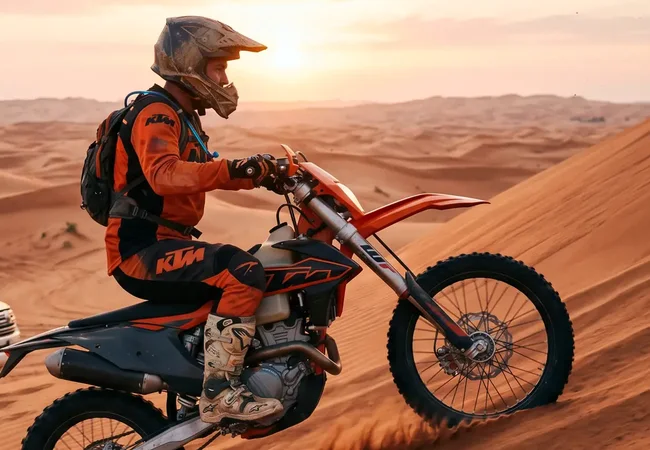
Book by the hour: AED 850 buys sixty minutes, AED 1,250 covers two. What guides are actually measuring is time already spent on a dirt bike, not enthusiasm for wanting to try one.
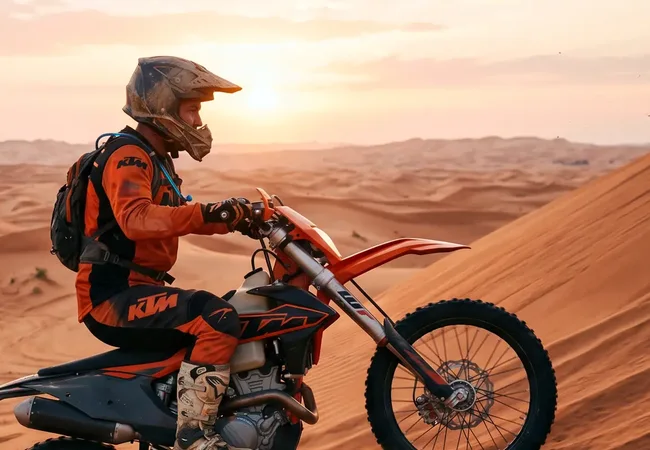
The 690 Enduro stays off the table until a guide has actually watched you handle a bike on the sand. Clear that check and it unlocks the advanced route, with the rate settled that same day rather than quoted upfront.
Did not make the cut for the KTM? Four wheels under the Raptor 700cc deliver nearly the same top speed, minus the balance risk — and a fair few riders end up preferring it once they have tried both.
AED 225 gets a Land Cruiser and a professional driver who handles all the dune bashing for you. It is the go-to add-on for mixed groups, giving whoever does not want to grip a throttle a way to still be part of the day.
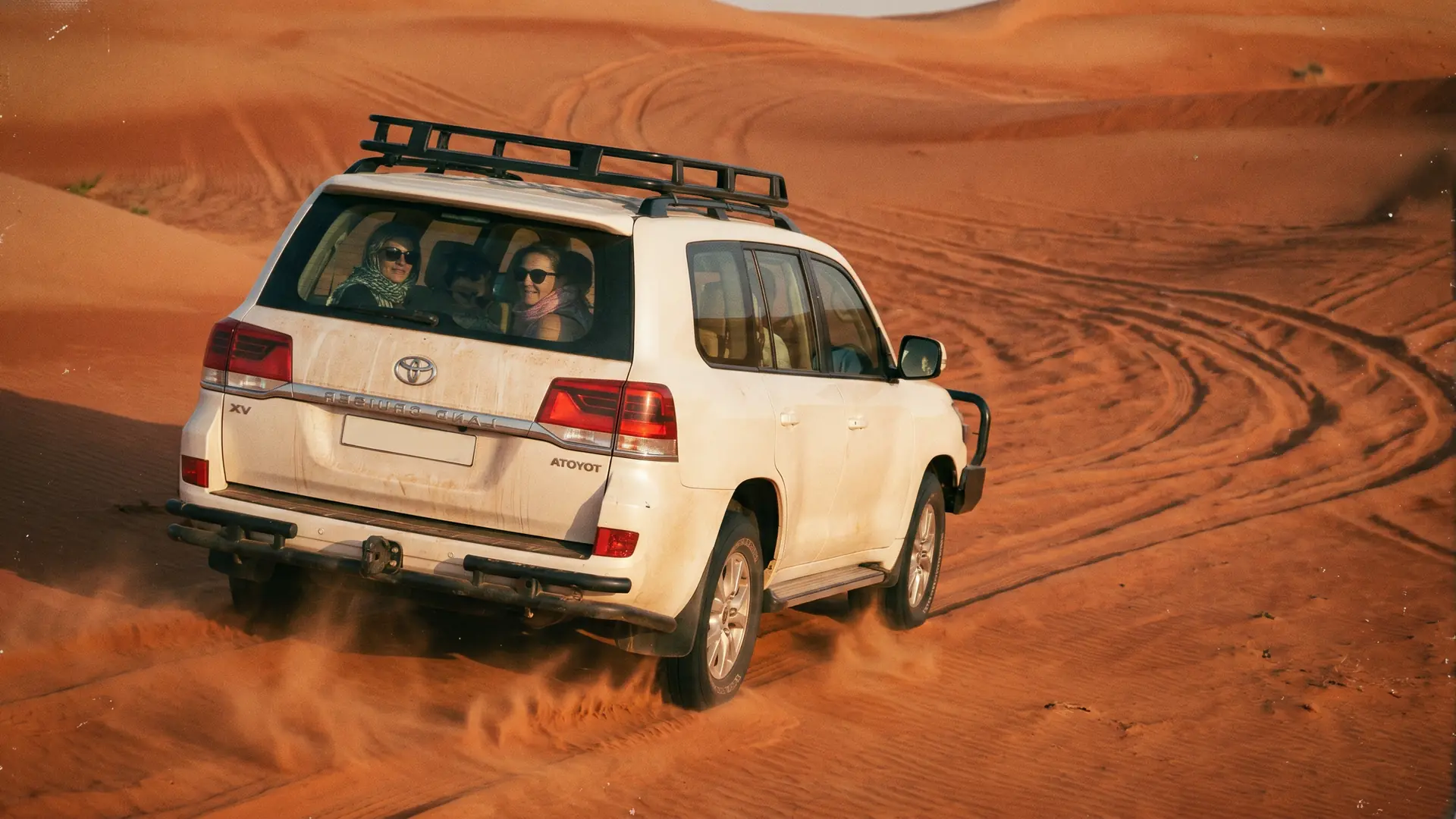
Early pickup, sand still holding its overnight cool, back in the city with lunch service barely started.
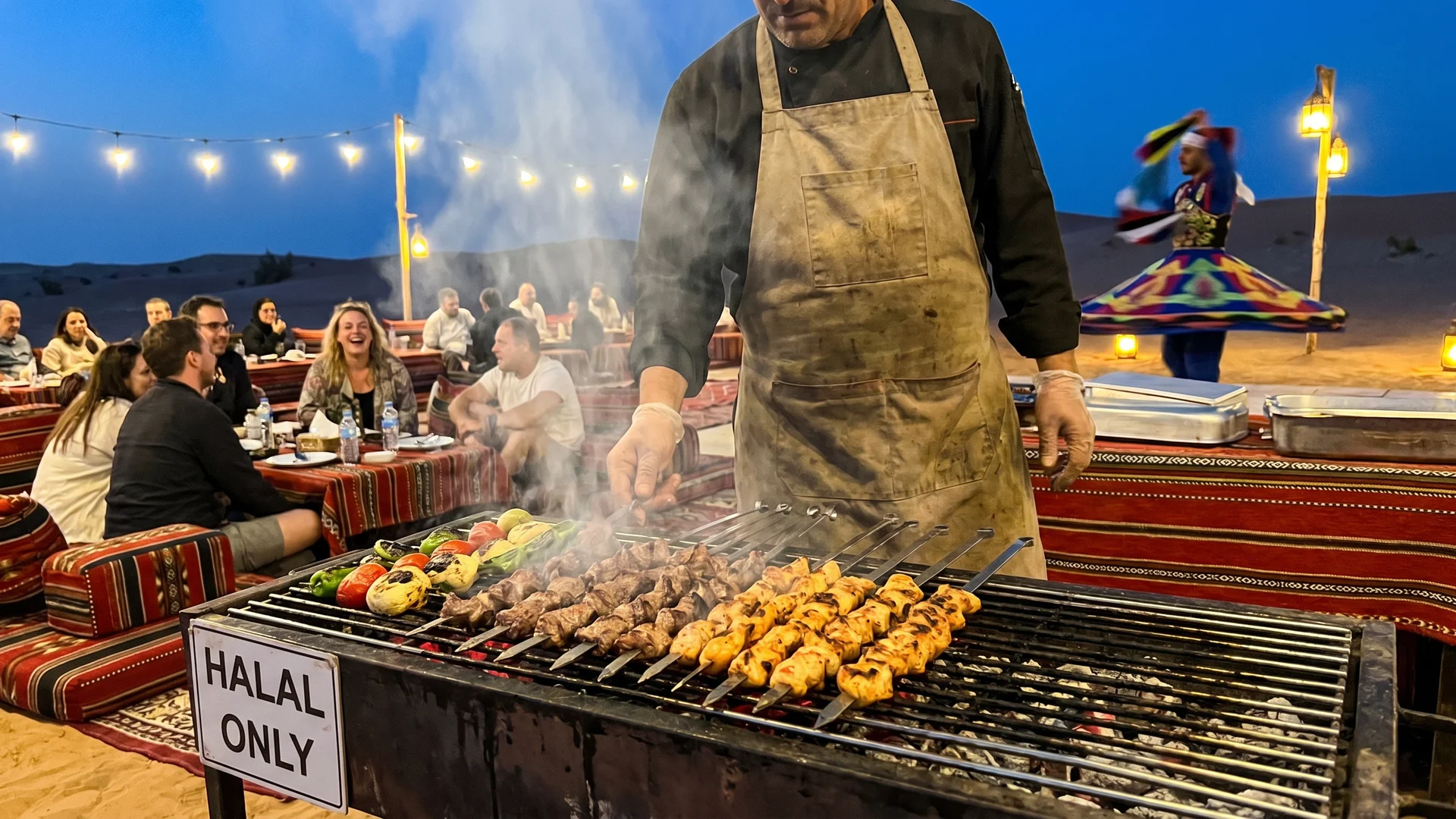
Dune bashing as the sun drops, the camp, a halal BBQ spread, transfers handled both directions.
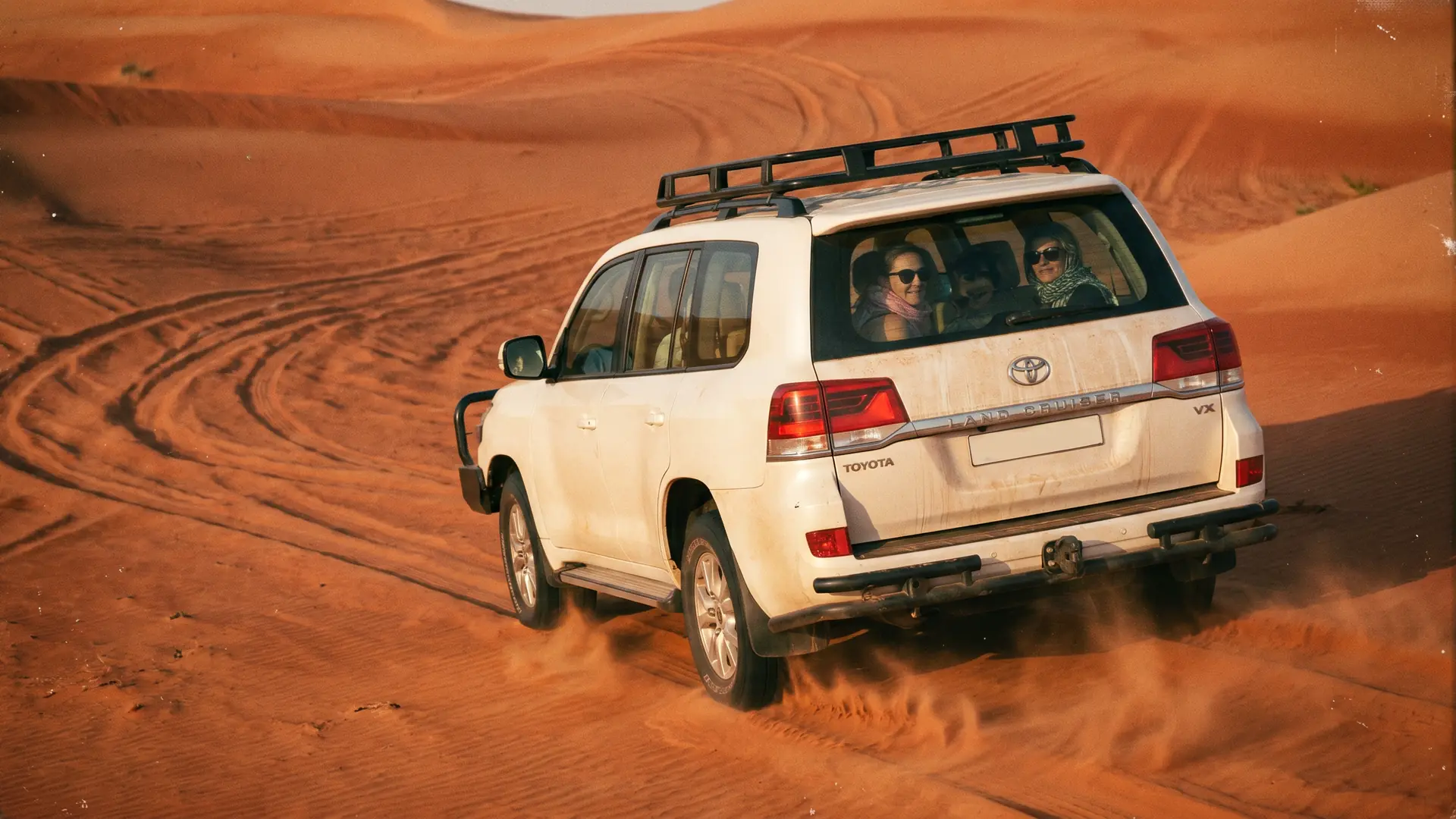
Your own vehicle, a reserved spot at the camp, timing built entirely around your group's schedule.
There's more past the three packages above: private morning departures from AED 799, private evenings from AED 1,400, camping overnight, and corporate day bookings. Motion sickness isn't a dealbreaker either — a calmer route without the dune bashing can be arranged on request.
Guests get picked up in darkness, roughly 4:30 in the morning, and touch back down while hotel breakfast buffets are still being set out. The flying season runs September through May. Even within that window, weather calls the shots more here than anywhere else on this page — a stiff breeze is enough to scrub a flight where an ATV session would simply carry on.
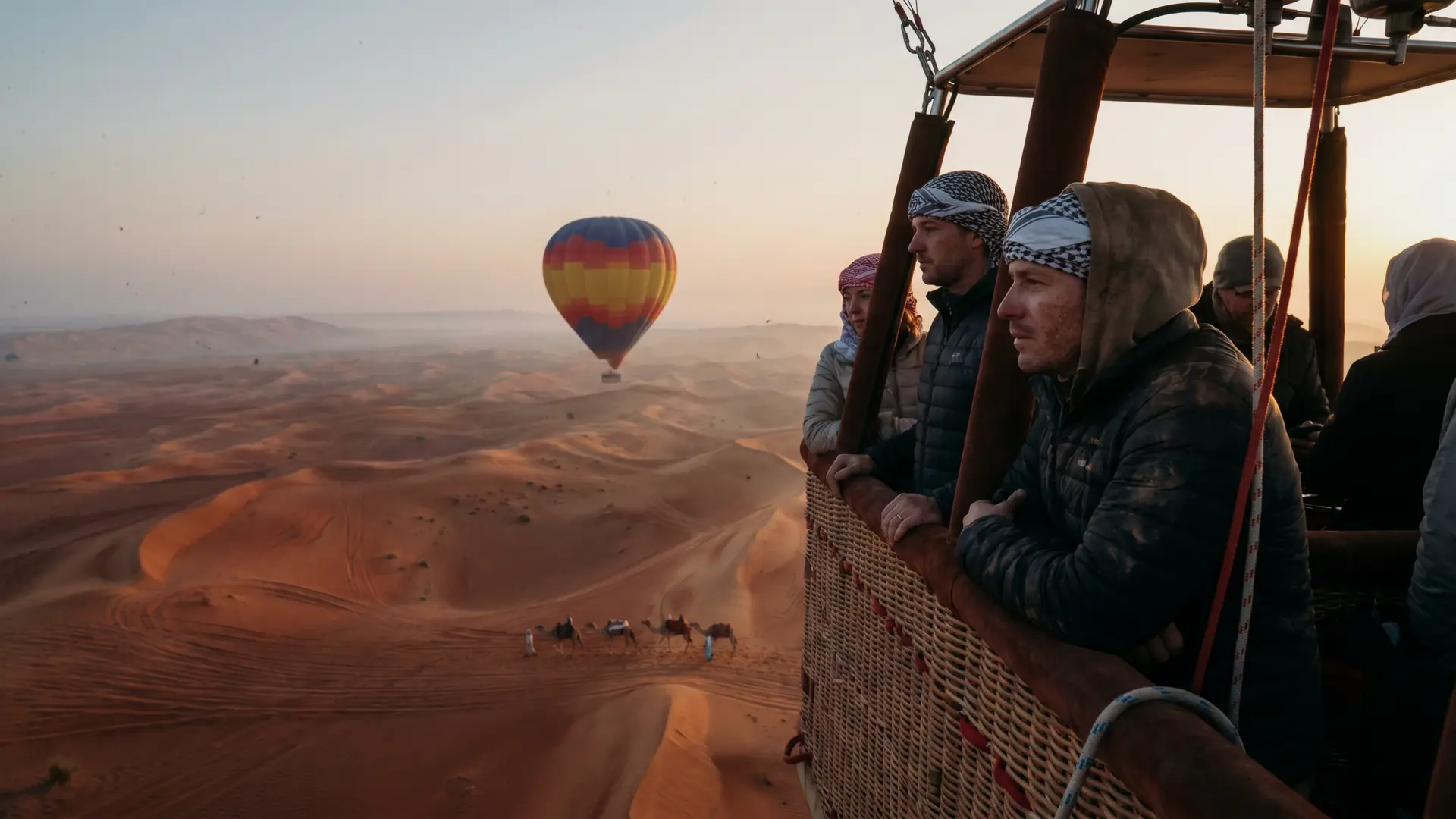
Three tiers to choose from: AED 1,049 buys the standard sunrise flight, AED 1,149 adds a falconry display once you're back on the ground, and AED 1,349 finishes with a full breakfast spread at the landing site.
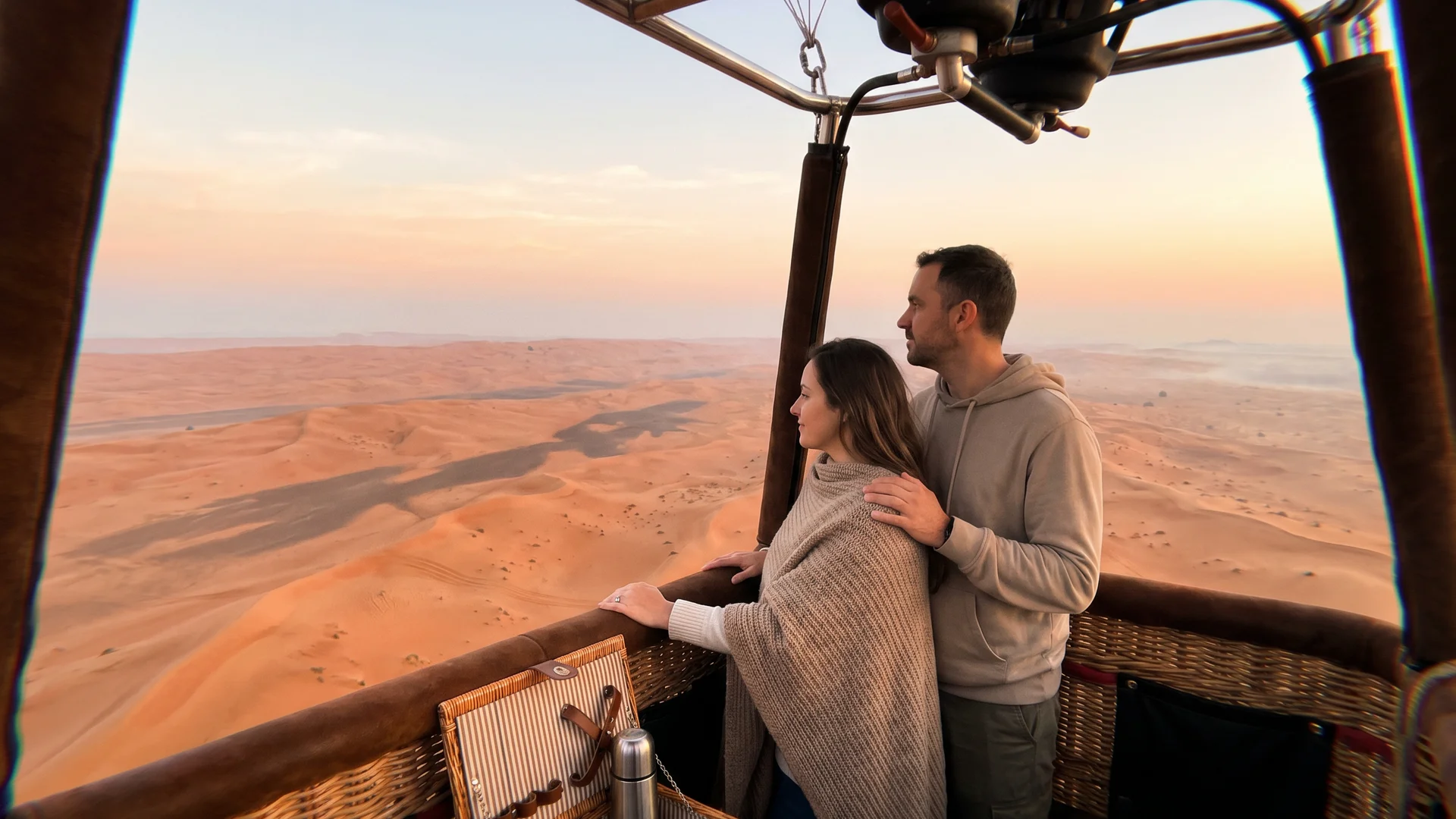
Nobody else shares the basket on this option — it flies for your group only, which is why proposals, anniversaries and corporate outings book it most.
Camels suit three kinds of riders best: the youngest in your group, grandparents who came along for the day, and anyone who watched a Raptor tear past and quietly ruled themselves out of trying one.
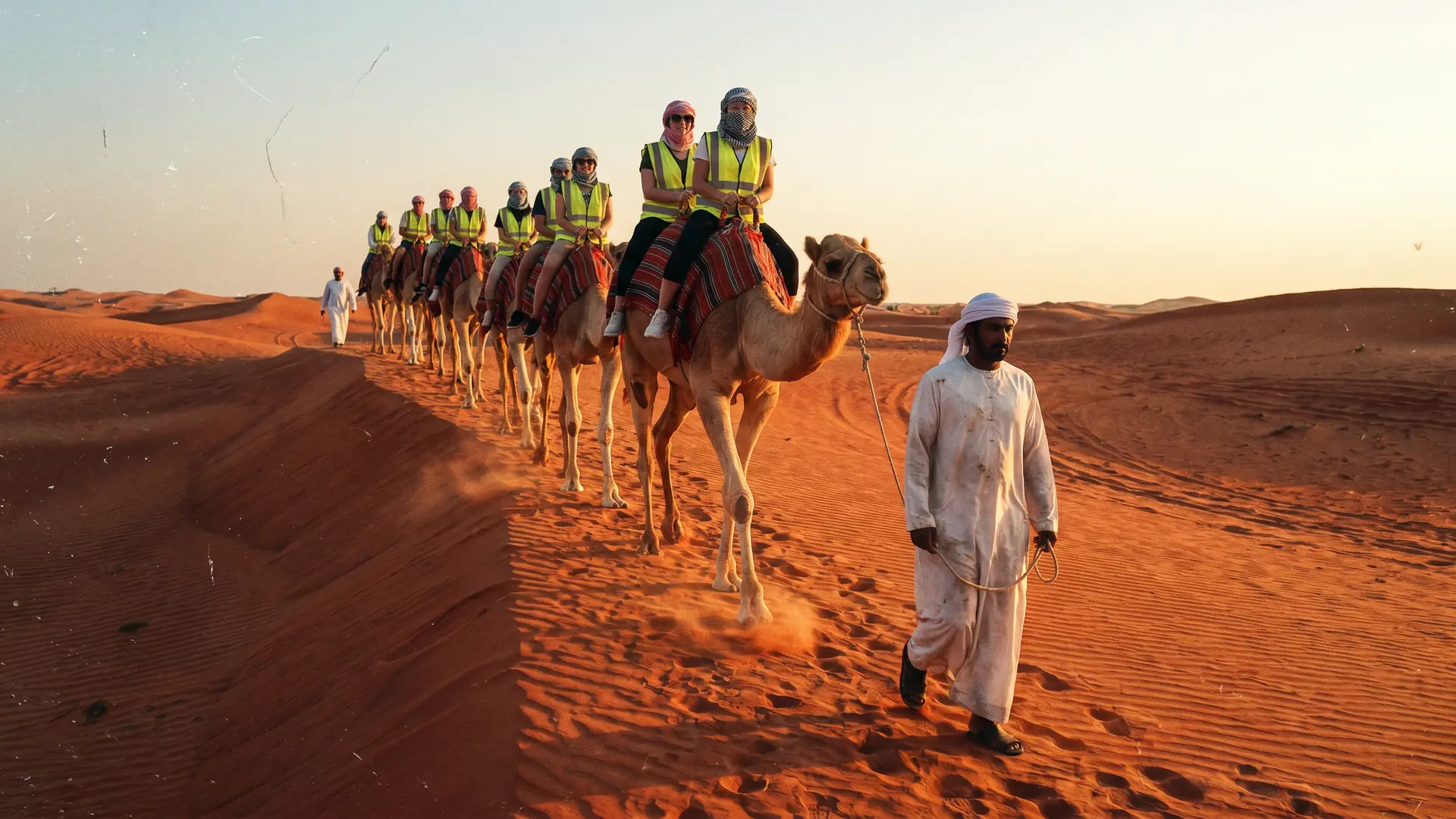
The route follows the same dunes the ATVs cross, just at walking pace with a guide out front and no throttle anywhere in reach. Open to riders from age three with an adult alongside.
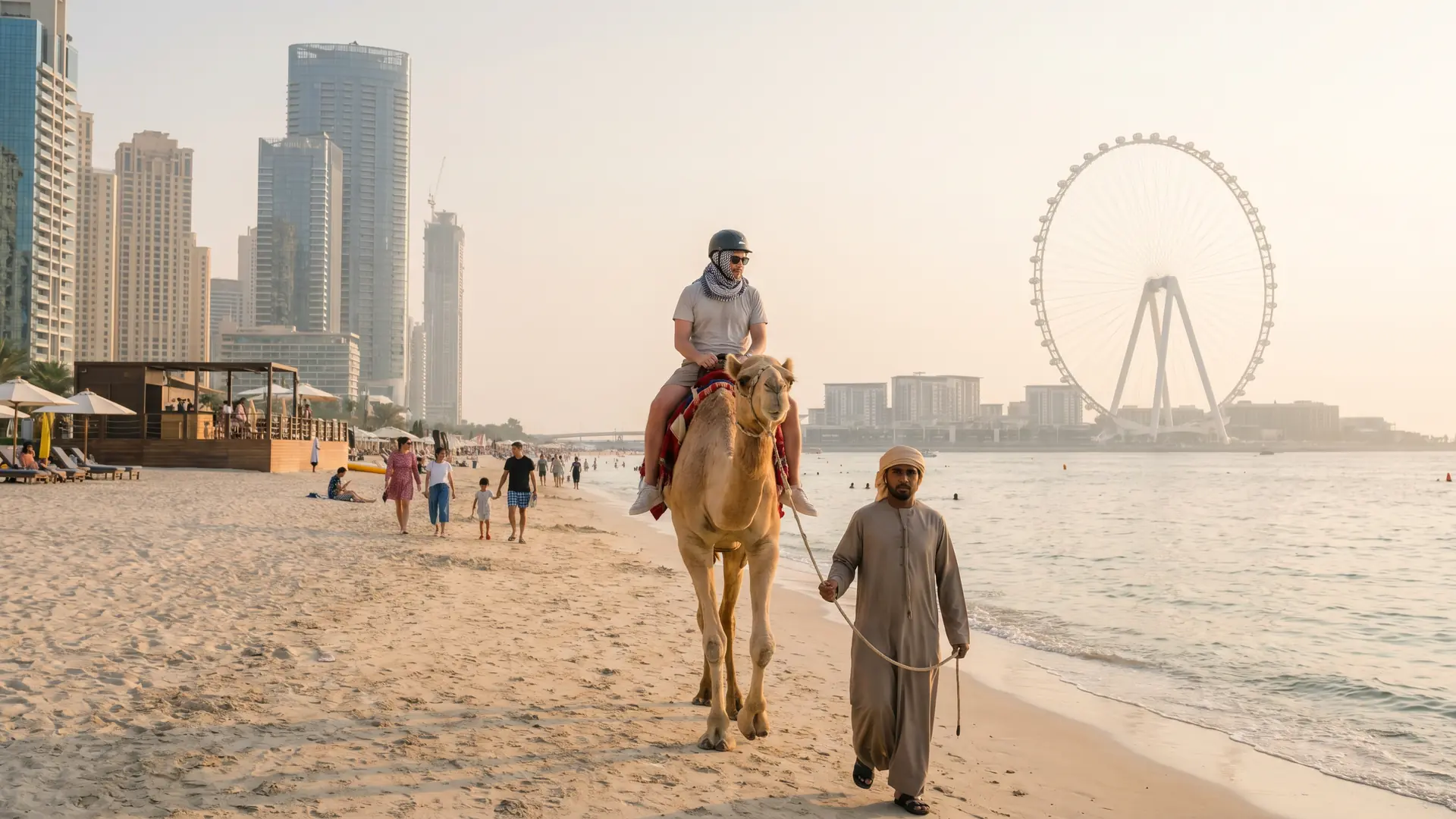
Skips the desert drive entirely, right on JBR's own sand in the city. The shot most visitors are actually chasing for their feed.
Guided desert horse riding is also bookable for anyone with existing saddle time, starting at AED 575.
What you pay here depends entirely on the booking — headcount, which machines are involved, and how many hours you want out of the day. There's no printed rate card for combinations; describe what you have in mind and a number comes back same-day.
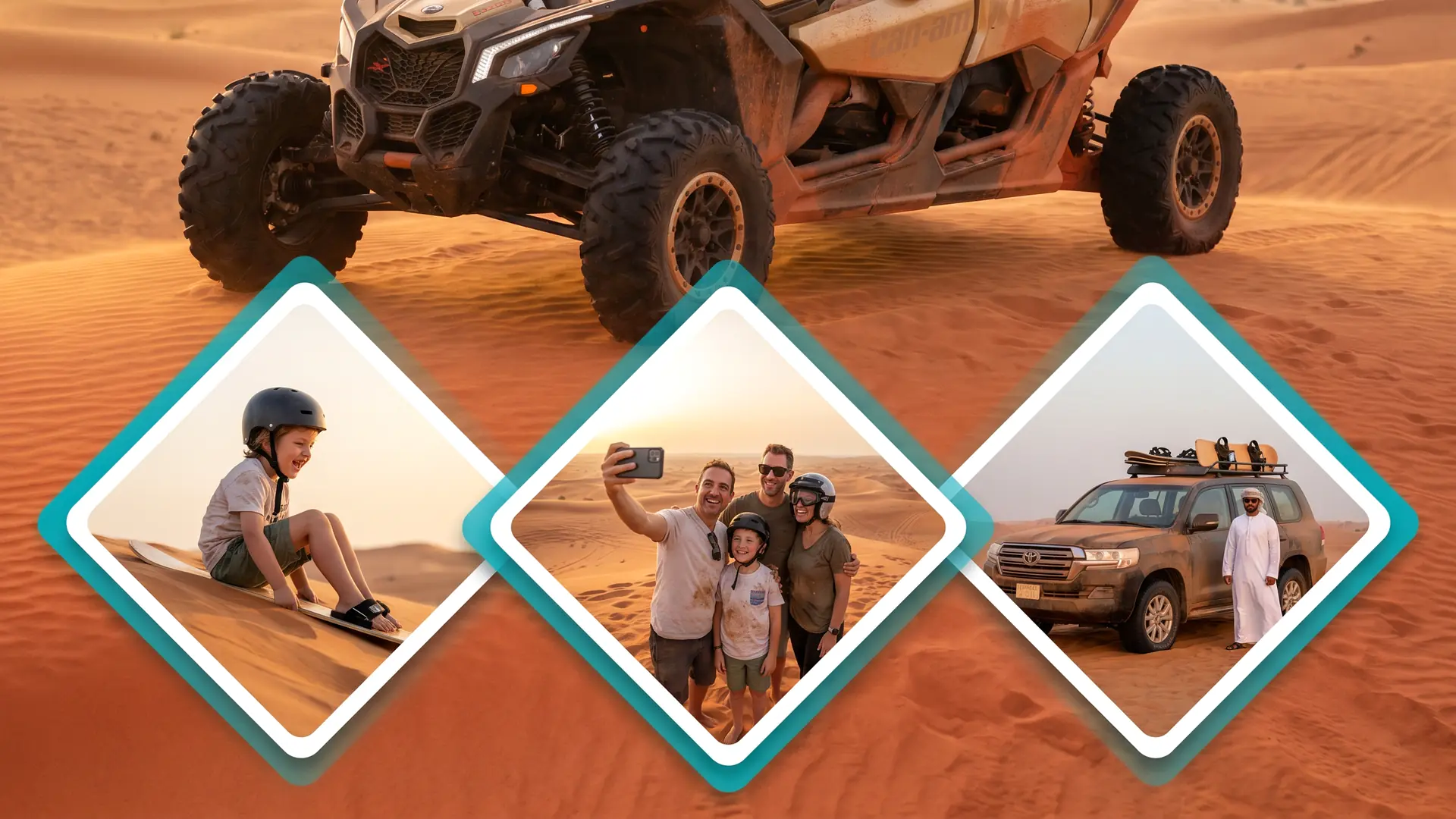
Mix an ATV session with a buggy run, a safari and camp dinner, and expect a quote somewhere in the AED 700 to AED 2,200 range depending on what's included. Bolt a sunrise balloon flight onto the front of the day and you've got the complete package.
For parties past the dozen mark, the split works both ways — some on ATVs, some in buggies — but everyone still answers to the same guides and moves on one shared timetable.
Every ATV, buggy and dirt bike booking on this site takes place at one spot: Al Lahbab, toward Al Ain southeast of the city. The colour in the photos is genuine, and the bowls and ridgelines behind it hold up no matter what hour or month you turn up.
The format doesn't shift with your slot. New riders spend a few minutes on level ground near base while the guide watches how they handle the throttle, and that read is what sets the route — not the clock, not the season, just what the guide actually sees in those first few minutes.
The order of these six never changes, cool-season afternoon or early summer sunrise alike. What flexes from one booking to the next is purely how long the riding stage runs.
The collection time slides with your slot, earlier for sunrise and later for anyone waiting on the cooler part of the day. Prefer your own car? A map to the meeting point lands once your booking is confirmed.
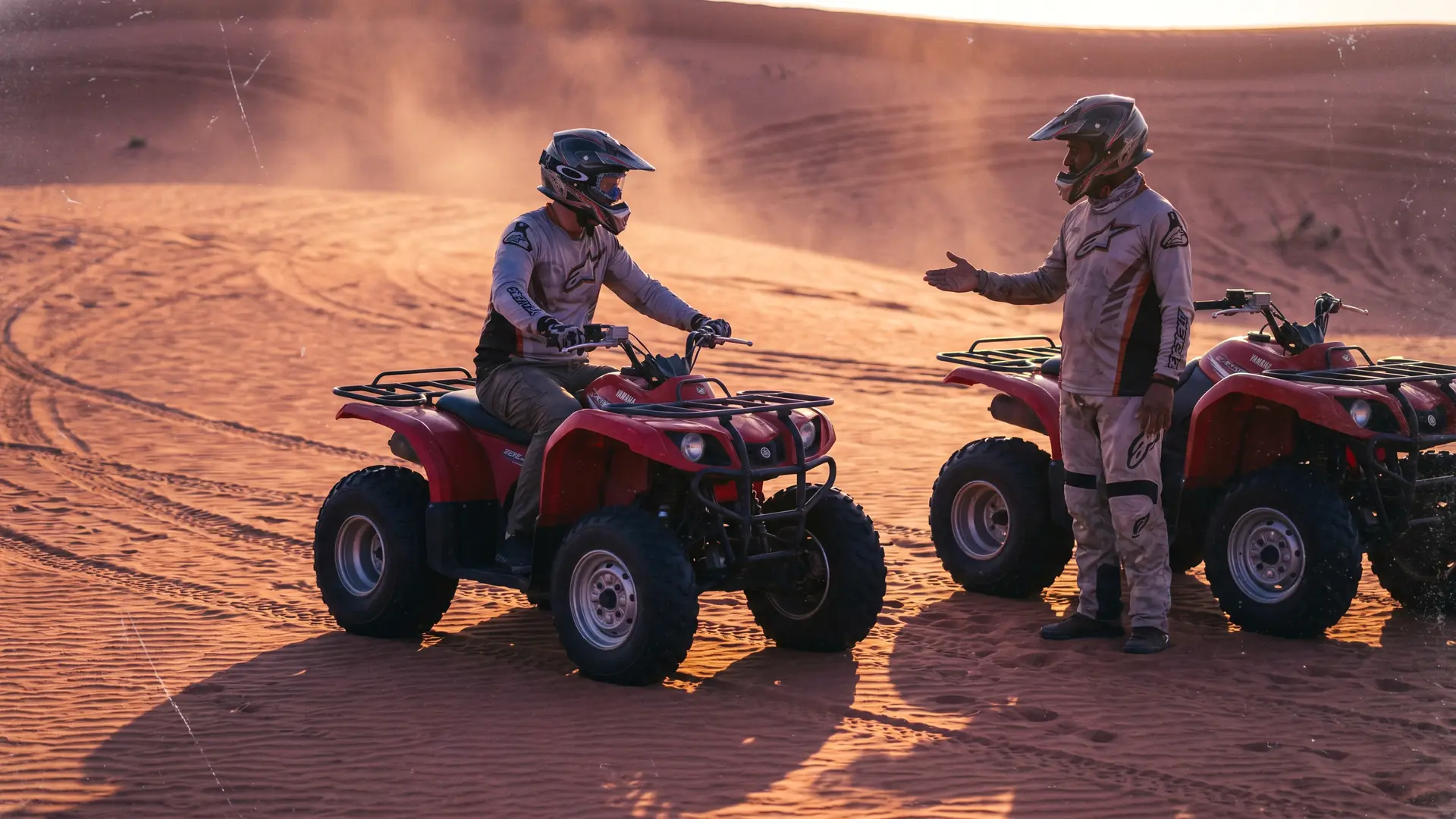
Helmet and gear come first, then a walkthrough covering how the throttle responds, braking without locking up, and the hand signal that means stop right now.
Before the real route starts, everyone gets a short flat-sand stretch where the guide simply watches how you ride. Confidence, throttle control, how you handle the machine — all of it gets read here, and it's what decides whether you land the beginner loop or something with more bite.
Then it's guide-led travel across the bowls and ridgelines in a tight single file, engine noise and kicked-up sand filling the gaps, with stops built in whenever the light is worth pausing for.
Arms get a rest, water gets handed round, and your photos are ready to go before the group either turns back toward the city or continues into whatever else got booked.
Booked dinner in? From here the group rolls directly into the halal BBQ camp, arriving just as the day's heat finally lets go.
Guides make the age call using a simple line: nine to twelve, and only on the supervised 90cc track with a guardian close by. Younger than that, riding along in a buggy next to a driving adult still works fine, and camels take riders from three years old up. Summer sessions build water stops into the ride itself rather than saving them for the return to base, with guides watching more closely for anyone flagging in the heat. Flag anything unusual about your group when you book, not when you arrive — there's more that can be arranged ahead of time than on the morning itself. The DTCM licence sits with Dream Land Adventure Tourism, and on the sand, the guide has the final say, not this page.
Based on 812 Google reviews
Based on 1,486 reviews
Each of the eight machines is priced separately, per rider. Most bookings land on the 400cc at AED 250. Step down to the 220cc and adults pay AED 200; step down further and kids ride the supervised 90cc for AED 150. Step up to the Raptor 700cc and the number rises to AED 795, but only once you've passed the ability check. Add a Land Cruiser safari with camp dinner to any of that and the combined total climbs to AED 290 if you go in the morning, or AED 375 once it's an evening booking.
Same machine, two labels. Say ATV and most people picture the American term; say quad or quad bike and that is closer to how it gets ordered here and across the UK. Either way, you are booking off the identical eight-machine lineup on this page.
Al Lahbab, off toward Al Ain on the southeast side of the city, sitting close to 45 minutes out from central Dubai. Whatever time slot you book, every session on this page happens on that same stretch of dune.
Neither is required. This happens on private land rather than public roads, so a licence never enters into it, and total beginners are welcome on the 220cc as long as it gets mentioned during the briefing. That first stretch of flat-sand warm-up exists purely so your guide can gauge what you're actually ready for.
Guided, always. You have your own machine, but a lead guide sets the route, controls spacing between riders and calls every stop. Nobody rides off alone, and the group always moves at the pace of its slowest rider, not the quickest one.
From nine to twelve, yes, on the supervised 90cc lane at AED 150, guardian close by the whole time. Below that age, riding solo isn't offered, though tagging along as a buggy passenger beside a driving adult works fine, and camels welcome riders from three years old.
Not automatically — pickup gets quoted and added before you pay. Business Bay, Marina, Downtown, JBR and Deira all count as standard runs. Driving yourself instead works too; directions arrive once your booking is confirmed.
Set aside close to half a day once travel gets added in. The session itself covers one loop of the dunes, but Al Lahbab sits about 45 minutes outside the city in each direction. That round trip is the real reason a safari or dinner so often gets tacked onto a single ride instead of driving out twice.
Shoes have to be closed-toe — that one is non-negotiable — plus sunglasses and clothing you are fine getting sandy. Helmets come with the booking, so that is one less thing to pack. The single most useful extra is something to cover your nose and mouth on the windier stretches: a scarf, a buff, whatever you already own works. Toss a change of clothes in the car too; you will be glad of it on the ride back.
It happens to someone on nearly every session, almost always from letting the throttle drop too early partway up a dune face, and the guide loops back to free you without any fuss. No fee attached, a couple of minutes lost at most.
Depends on how many people actually want to hold the controls. Everyone driving their own machine points toward ATVs, priced individually per rider. Just one or two keen drivers in a bigger group usually makes a buggy the better value, since the cost attaches to the vehicle rather than each seat. Plenty of bookings split the difference and run both side by side under one guide.
Yes, year-round, but the clock shifts with the season. From roughly May to September, slots move to early morning and the last couple of hours before sunset, since midday in open sand gets genuinely tough to handle. October through April, any daylight hour is comfortable.
Bad weather moves your slot, it does not cancel it. If a sandstorm or strong wind is forecast, you will hear from us ahead of time with a new time to pick from, at no extra charge. Of everything on this page, the ATV ride is one of the least weather-sensitive — balloons are usually grounded long before conditions get bad enough to stop a guided ride on the dunes.
A couple of days' notice usually covers a midweek slot; for Friday or Saturday, aim for closer to a week out. Late-afternoon departures and the Raptor 700cc are the first bookings to disappear off the calendar. Secure online advance payment confirms your booking, support available 24/7.
Timing changes more about an ATV session here than most people expect before they book. Winter, October through April, keeps every slot on the table at any hour you like — AED 200 gets you on the 220cc, and the Raptor 700cc tops the range at AED 795 once you're cleared for it. Summer, May through September, pulls the schedule to sunrise and the two hours before sunset, because midday heat over open sand stops being a minor inconvenience and starts being the whole story.
One combination beats every other option on the sheet, every season: Evening Desert Safari bundled with the ATV ride and BBQ dinner, AED 375 all in, timed so your ride lands right as the temperature drops and the light turns into something worth photographing. Secure online advance payment confirms your booking, support available 24/7.
First light, calm air, and the day's softest sand.
AED 250Timed to land right as the heat finally breaks.
AED 375October to April, any hour, no schedule limits.
AED 200Beginner-friendly power before the sun takes over.
AED 200Ages nine to twelve, guardian watching every lap.
AED 150Full throttle, released only after a rider check.
AED 795Overnight-cooled dunes, welcoming for new riders.
AED 290Up in the basket before the first ATV engine of the day even starts.
AED 1,049October through April, without much competition. Temperatures stay comfortable enough that any hour of the day works, which genuinely isn't true for the other seven months on the calendar.
Winter in Dubai doesn't mean cold, it means the desert stops fighting you. Daytime temperatures sit in a range where standing next to a running engine in full gear feels like a non-event rather than an ordeal, and that comfort holds from mid-morning through late afternoon. It's the only stretch of the year where a booking at noon feels no different from one at 9am or 4pm, which is exactly why winter weekends are the first slots to sell out on this site.
Push into May and the character of the year changes fast. Riding doesn't stop, but the comfortable window shrinks down to the edges of the day, and the schedule follows it there deliberately rather than pretending the middle of the day still works. Anyone who has stood on open sand at 1pm in August understands why that shift happens without needing it explained twice.
If your trip dates are flexible, winter is the easy recommendation, especially for families with young children, older relatives, or anyone who runs hot generally. If your dates are fixed and they land in summer, that's not a reason to skip riding altogether — it's a reason to book the earliest or latest slot available and treat the middle of the day as time for something indoors instead.
The shoulder months either side of winter, roughly April and October, are worth knowing about too. The heat hasn't fully arrived or has just started easing off, crowds are thinner than peak winter weekends, and a well-chosen slot in either month can feel close to a winter session without the competition for booking dates.
Dubai's desert summers run genuinely hot, and open sand under direct sun feels hotter again than a shaded city street, since the sand itself radiates heat back up at you. It's real enough to shape the schedule, not just a line in a brochure.
Nobody needs an exact figure to understand what a summer afternoon on exposed sand feels like once they've stood on one. What matters practically is that the heat isn't spread evenly across the day — mornings before the sun climbs high, and the couple of hours before sunset, are noticeably more manageable than anything in between, and that gap between the comfortable hours and the punishing ones is wider in the desert than it is back in the city.
That's why sessions don't get cancelled for heat, they get moved. Nobody is offering a midday ride in August, because nobody would enjoy it, and the schedule reflects that rather than pretending otherwise. Riders booking through summer end up choosing between a sunrise slot and a late-afternoon one, with nothing offered in between.
On the ground, heat management is mostly about water and pacing rather than anything dramatic. Chilled water comes with every booking, guides watch riders more closely for fatigue once temperatures climb, and sessions in the hottest stretch of the year tend to include more built-in breaks than the same ride would need in January.
Winter sidesteps the whole issue. Once the season shifts to the cooler months, heat drops out of the conversation almost entirely, and the choice of slot comes down to preference rather than necessity.
Neither slot beats the other outright — they're genuinely different rides. Morning sand sits firmer from the overnight cool, while evening brings softer light, a dropping temperature through the session, and a dinner waiting at the end of it.
A morning departure means overnight cooling has had hours to work on the sand, so the surface grips tighter under the tyres than it will later in the day. Roads out toward Al Lahbab are quieter too, before the rest of the city is properly awake, and you're back with your afternoon completely free rather than eaten up by a session that ran late.
Evening sessions trade that firmness for atmosphere. The light goes from harsh to genuinely soft over the course of the ride, temperatures drop noticeably as the sun gets low, and for anyone booking the safari and BBQ combination, the timing is built so the machine session leads straight into dinner rather than requiring a second trip out.
Operators run both because travellers don't want the same thing. Early risers and anyone still adjusting to a new time zone often prefer getting the activity done before the day gets going. Others would rather use the morning for something else entirely and treat the ride as the evening's main event. Families with young children sometimes split the difference, using morning slots to avoid a session running past a normal bedtime.
First-timers on a machine tend to find the firmer morning sand the gentler place to start out. Chasing good photos or simply preferring cooler air is what pulls most repeat riders toward evening instead.
Yes, more than most first-time visitors expect. The colour of the sand itself barely changes, but the air, the light and the number of people out on the dunes all shift noticeably between the two seasons.
Winter air over the desert tends to be clearer, and the light lands sharper as a result — the kind of light that makes photos taken in December or February look noticeably crisper than ones taken in July. Summer introduces a low haze that builds through the hottest stretch of the day, softening the horizon and taking some of the punch out of the colour riders come here expecting.
Crowds move with the season too. Winter coincides with peak tourist numbers in Dubai generally, so weekend slots at popular times fill up further in advance and the base camp itself feels busier. Summer sessions, clustered into that narrow sunrise-and-sunset window, often end up quieter simply because fewer people are travelling and fewer slots are on offer to begin with.
Physically, the difference shows up in small ways: a breeze that actually feels pleasant in winter versus still, heavy air in summer that makes the ride's own airflow the only relief you get. Dust behaves differently too — drier winter sand kicks up a finer plume, while summer sand can feel almost warm to the touch late into the evening.
None of this changes what the ride itself involves. The dunes, the route and the machines stay the same all year; what changes is the atmosphere around them, and that's often the deciding factor between a winter trip and a summer one.
You get moved to another slot, not left without a ride. Sandstorms and strong wind are the two disruptions that actually matter here, and both trigger a reschedule with no extra charge attached.
Genuinely bad weather is uncommon across the year, but it does happen — a sandstorm rolling through, or wind strong enough that visibility and safety on the dunes both take a hit. When conditions look questionable, someone reaches out ahead of your slot rather than leaving you to find out at the pickup point, and alternative times get offered for the same day where possible, or the next available day if not.
This isn't tied to one particular month. Most of the year passes without any disruption at all, and when it does happen it tends to be short-lived — a system that clears within a day rather than a stretch of unrideable weather. Nobody loses their booking outright over it; the date just moves.
ATV sessions actually hold up better against marginal weather than several other activities on this site. A bit of wind that would ground a hot air balloon flight rarely stops a guided ride on the dunes, since the machines and the route don't depend on still air the way a balloon does. Sandstorms are really the only weather event serious enough to pause riding entirely.
If your visit is short and the forecast around your dates looks uncertain, mentioning that when you book is worth the extra line in the message. It won't change the price or the process, but it puts your flexibility on record before anything actually needs rescheduling, rather than starting that conversation from nothing on the morning itself.
For most riders, yes. The light and temperature at both ends of the day are different enough from a standard midday slot to notice immediately, and neither costs you much beyond an earlier alarm or a slightly later dinner.
A sunrise booking means leaving the hotel while the city is still quiet, arriving to a base camp that hasn't filled up yet, and riding through air that hasn't had a chance to warm up. The trade-off is obvious: an early start, sometimes uncomfortably early depending on your hotel's location. What you get back is a stretch of dunes that can feel close to empty before other groups arrive, and light that photographs noticeably better than the flat glare of midday.
Sunset works the opposite way and pairs naturally with dinner. Riding through the last couple of hours of daylight means watching the temperature drop through the session rather than fight it, and for anyone booking the safari and BBQ combination, the ride simply flows into the camp rather than requiring a separate outing. It's also the slot most riders end up choosing, since it fits neatly at the end of a normal day rather than replacing the start of one.
Neither slot suits absolutely everyone. A sunrise booking asks a lot of anyone who struggles with early mornings on holiday, and a sunset booking pushes your return to the city later into the evening, which matters if you have an early flight or a dinner reservation elsewhere. Most riders weigh it up and land on evening, partly for the light and partly because it's simply the easier slot to fit around everything else on a trip.
A week or more out for winter weekends and for either edge of the summer day. Midweek slots in the shoulder months are usually easier to arrange on short notice, sometimes just a few days ahead.
Winter is the busiest season on this site by a wide margin, and weekend afternoons or evening safari combinations are the first things to sell through. If your trip dates land on a Friday or Saturday between October and April, booking a week or more ahead gives you the best shot at the slot you actually want rather than whatever is left.
Summer works differently but ends up just as tight in its own way. There are only two rideable windows a day instead of a full spread of daylight hours, so demand concentrates hard into sunrise and late afternoon even though total visitor numbers are lower than winter. A short list of slots filling from a smaller pool of days can book out just as fast as a long list filling from a bigger one.
April, May, September and October sit in between, and bookings there tend to be more forgiving. Fewer people are actively planning around the exact weather window, so a few days' notice is often enough, though weekends still benefit from earlier planning regardless of month.
If your dates are close and you're not sure what's still open, a quick message gets you a real answer faster than guessing — availability shifts day to day, especially around the two narrow summer windows.
None of this needs to be memorised before you book. Choosing a season mostly comes down to how much heat you're comfortable standing in and how the rest of your trip is already arranged; choosing a slot inside that season comes down to whether you'd rather ease into the day early or wind it down as the sun drops. Winter takes most of the guesswork away by leaving every hour open. Summer simply narrows things to one end of the day instead of the other, which turns out to be a smaller decision than it sounds once you're looking at a calendar with two realistic options instead of ten. Whichever you land on, the machines, the route and the guide out front stay identical — timing only changes the light, the temperature, and how crowded the dunes feel around you.
Yes, provided you ask before the day itself and the new slot has space. Message on WhatsApp with your booking reference and the time you'd rather have; most swaps get confirmed within the hour rather than needing a full rebooking.
Sessions keep running through Ramadan, though timing around iftar can shift slightly for evening bookings. Confirm your exact slot when you book that month, since the usual evening window sometimes moves earlier or later around sunset itself.
December and January tend to edge it, combining the clearest air of the year with comfortable temperatures at almost any hour, which means more flexibility in when you shoot rather than being locked into sunrise or sunset alone.
No. Every price on this page holds year-round regardless of season or time slot — what changes with the season is which hours are actually offered, not what you pay for them.
Noticeably, even if it stays warm by most standards. The drop from peak afternoon heat to early evening is significant enough that riders who found midday unbearable generally find a sunset slot completely manageable.
Within reason, yes. Slots aren't rigidly fixed to one single time, so mention a preference when booking and it gets accommodated where the schedule allows, particularly for private or combo bookings.
Cool enough that a light layer is worth having for the first fifteen minutes or so, especially at sunrise, but it warms up quickly once the sun is properly up and once you're actually riding rather than standing around at the briefing.
It plays a real part. Coastal humidity adds to how the heat feels even away from the water, which is another reason the schedule leans so heavily on the cooler edges of the day rather than offering a full midday slate through summer.
It matters less than the actual time of day you pick. Even in the hottest stretch of summer, a well-timed sunrise or late-afternoon booking works fine for a short trip — season mainly affects how much flexibility you have, not whether a short visit can fit one in.
No specific season gets ruled out entirely. Extreme heat gets managed through scheduling and hydration rather than cancelling summer outright, and the same warm-up and guided format applies regardless of which month you book.
Choose a machine and a slot that suits your trip, secure it with online payment, and your pickup slot gets nailed down over WhatsApp the night before departure.